

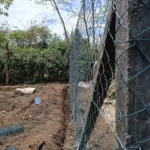

While statistics and case studies testify to the success of fencing, nothing speaks louder than the voices of those who live on the frontlines—farmers, herders, and community leaders whose lives have been reshaped by the installation of wildlife conservancy fences. Below are extended real-life style testimonials, capturing the human spirit of resilience and cooperation.
1. Testimonial from a Farmer in Laikipia County
“Before the fence, elephants would storm into my farm without warning. I remember one night when a herd came through and destroyed nearly my entire maize crop—three months of hard labor gone in just a few hours. We could hardly sleep at night, because every rustle in the dark might have been an elephant. Since the conservancy built the electric fence, our lives have changed. I can now plant maize and beans confidently. The elephants stay within the conservancy, and I stay with my crops. My children have food to eat, and we even sell surplus to the local market. For the first time, I feel farming here is not gambling with nature but working alongside it.” — Joseph Mwangi, Farmer, Laikipia
📞 Call/Text/WhatsApp: +254 722 708034 / 0720 456534
2. Testimonial from a Maasai Herder in Narok
*”For generations, we Maasai have lived with lions. They are part of our culture, part of our songs and stories. But living with them has not been easy. I have lost cows, sheep, and goats to predators. Every time a lion took a cow, there was pressure from elders to hunt the lion in retaliation. It was a painful cycle—our cows fed our families, and lions were punished for doing what they know.
Since the predator-proof fencing came, things have been different. My cattle are safe, and I no longer lose sleep listening for hyenas. More importantly, we no longer feel anger towards the lions. They remain in the conservancy, and we are proud to see tourists coming to view them. My son now works as a ranger at the conservancy, and he tells me that protecting lions is now our duty. This fence has given us peace—peace in our homes and peace with our traditions.”* — Saitoti Ole Nkeri, Herders’ Elder, Narok
3. Testimonial from a Women’s Group Leader in Samburu
*”When the conservancy introduced fencing, we women were asked to help with planting posts, preparing trenches, and even cooking for the workers. At first, many of us wondered if this would truly help our lives. But soon, we saw changes.
With elephants kept out of our farms, our yields doubled. Now we have extra income to support our daughters in school. The conservancy also shares part of the tourism money with the women’s groups. With this, we started a beadwork cooperative. Today, tourists buy our ornaments, and the fence indirectly supports our creativity and dignity.
I no longer see the fence as something that divides us from wildlife—it is something that connects us to opportunities we never imagined. It has turned women into business owners, into leaders, into educators for our children.”* — Naipanoi Lemasolai, Samburu Women’s Cooperative Leader
📞 Call/Text/WhatsApp: +254 722 708034 / 0720 456534
4. Testimonial from a Youth Conservationist in Lewa
*”I grew up watching rangers patrol our conservancy. They told me stories about rhinos being killed for their horns. I always felt helpless because poachers were dangerous, and as a child, I could do nothing.
When fencing was strengthened at Lewa, everything changed. Poaching numbers fell sharply. Today, I work with the conservancy as part of the youth monitoring team. We patrol the fences, check for any tampering, and ensure the animals remain safe inside. Every day, I feel like I am saving Kenya’s future—protecting rhinos, elephants, and lions so that my children will one day see them alive.
Before, many young people in our village only dreamed of leaving to look for work in towns. Now, many of us see conservation as a career. The fence gave us jobs, but it also gave us a mission.”* — Brian Otieno, Youth Ranger, Lewa Conservancy
5. Testimonial from a Community Teacher in Amboseli
*”When fences were erected around our conservancy, people thought only about crops and livestock. But as a teacher, I saw another impact—education.
Children used to miss school after elephants raided farms because families were too busy guarding fields. Others missed school when lions killed cows, because families could not afford fees. Now, with fences protecting our farms and cattle, children attend classes regularly.
Even better, the conservancy uses part of the tourism income generated through safe wildlife viewing to support local schools. We received new books, desks, and even scholarships. I tell my pupils that the fence is not just around the animals—it is around their future. Without it, their education would not have been possible.”* — Mary Atieno, Primary School Teacher, Amboseli
📞 Call/Text/WhatsApp: +254 722 708034 / 0720 456534
6. Testimonial from a Community Elder in Tsavo
*”For a long time, we elders felt that conservancies were not for us, but for outsiders. Tourists came, conservationists came, but our people bore the cost when wildlife destroyed our crops. We felt forgotten.
The new fencing project changed that. We were invited to community meetings, and our opinions were respected. Today, the fence protects both our fields and the elephants. The conservancy even trained some of our youth in fence maintenance.
For the first time, we feel ownership. We do not cut the wires; we guard them. Because the fence is ours, just as much as it is the animals’. It is the line that tells us conservation is not against us, but with us.”* — Mzee Kilonzo, Elder, Tsavo Community Council
Why These Voices Matter
Each of these testimonies reflects more than personal experience—they represent the transformation of entire communities. Fencing projects succeed not only when they shield rhinos or dissuade lions but when they embed themselves in the lives of people. Crops saved, livestock secured, children educated, women empowered, and youth employed—these are the true pillars of sustainable conservation.
Without the trust and participation of communities, fences are vulnerable to sabotage. With them, fences become more than steel—they become shared hope.
📞 Call/Text/WhatsApp: +254 722 708034 / 0720 456534