


In recent years, Kenya has seen a rising wave of human-elephant encounters — some turning deadly — as people and wildlife compete for dwindling land and water resources. Incidents of elephants wandering into farmlands, grazing zones, and even security installations have underscored a pressing need for innovative coexistence strategies.
In one notable incident in northern Kenya, a group of community members narrowly escaped harm when a herd of elephants strayed into their grazing fields at dawn. The elephants, likely searching for food and water, destroyed several acres of crops and water storage containers before being driven off by wildlife rangers. Unfortunately, such encounters are becoming more frequent across elephant range areas in Kenya.
According to the National Wildlife Census Report (2021), Kenya is home to more than 36,000 savannah elephants (Loxodonta africana) — with populations thriving in ecosystems such as Tsavo, Laikipia-Samburu, Amboseli, and the Aberdares. While conservation efforts have successfully reversed the drastic population decline seen in the 1970s and 1980s, the recovery has brought a new challenge: human-elephant conflict (HEC).
Call | Text | WhatsApp: +254 740 800099 / 0720 456534
Email: info@electricfences.africa
Website: www.electricfences.africa | www.electricfences.co.ke
The Escalating Challenge of Human-Elephant Conflict
HEC has become one of the greatest threats to both human livelihoods and elephant conservation. As climate change intensifies dry seasons, both people and elephants increasingly depend on shared water points and grazing lands. This competition often leads to crop destruction, injuries, and, tragically, fatalities.
To address the crisis, the Kenya Wildlife Service (KWS) and conservation partners have adopted multiple interventions — from better land-use planning to community awareness programs. However, among these strategies, electric fencing has emerged as one of the most effective solutions in managing human-elephant boundaries.
Electric Fencing as a Conservation Tool
Electric fencing is transforming conservation landscapes in Kenya. By clearly marking wildlife corridors and preventing elephants from encroaching onto farms and settlements, fences help safeguard both communities and elephants.
In northern Kenya’s Naibunga Conservancy, located within the expansive Laikipia-Samburu ecosystem, electric fencing has drastically reduced elephant incursions. The ecosystem, covering over 37,000 km², supports roughly 7,500 elephants — most of which roam across community and private lands. Unlike traditional national parks, this ecosystem is largely unprotected, making it a unique model for community-led conservation.
Call | Text | WhatsApp: +254 740 800099 / 0720 456534
Email: info@electricfences.africa
Website: www.electricfences.africa | www.electricfences.co.ke
Community-Led Solutions: The Naibunga Example
Naibunga Conservancy, covering about 466 km², consists of nine community lands managed primarily by the Mukogodo Maasai — a pastoralist community that depends heavily on livestock. The coexistence between people, livestock, and wildlife is delicate, but with the installation of a 40 km solar-powered electric fence, the situation has improved dramatically.
The fence was constructed through a partnership between KWS, the Northern Rangelands Trust (NRT), and international donors. It’s a two-strand high-voltage system built on treated blue gum posts with strong outriggers that prevent elephants from reaching or damaging the wires. The design allows smaller wildlife and livestock to pass safely beneath, maintaining ecological balance.
Each section of the fence is supported by solar-powered energizers maintaining voltages above 7,000V — enough to deter even the most persistent elephants. Power stations are spaced approximately every 7 kilometers to ensure consistent current flow throughout the fence.
Success Stories: Safer Communities and Wildlife
Local residents report significant improvements in safety and quality of life since the fence’s installation. According to community leaders in Naibunga, incidents of elephant attacks have dropped to nearly zero.
Women and children, who previously faced daily fears when fetching water or walking to school, now move freely. Crops and acacia trees — once ravaged by elephants — are regenerating. The pods from these trees are essential for livestock feed during dry spells, further strengthening the community’s resilience to drought.
For many families, the electric fence has meant peace of mind and the ability to engage in sustainable farming and water management without fear of wildlife incursions.
Call | Text | WhatsApp: +254 740 800099 / 0720 456534
Email: info@electricfences.africa
Website: www.electricfences.africa | www.electricfences.co.ke
Challenges and Lessons Learned
While fencing has proven effective, it’s not without challenges. Elephants are highly intelligent creatures — some have learned to test the limits of the fence or exploit weak points, especially during dry seasons when water is scarce.
Maintenance also remains a key issue. Damage from storms, fallen trees, or vandalism requires skilled technicians to repair, and not all communities have the expertise or equipment for regular maintenance. This has created a growing demand for professional electric fence installers and technicians who understand wildlife behavior and advanced fence systems.
Beyond Barriers: Building Coexistence
Experts caution that electric fencing should complement — not replace — broader conservation strategies. According to wildlife conservationists, fencing works best when combined with:
- Clear land-use zoning to separate farms and wildlife corridors.
- Community awareness programs that promote coexistence values.
- Alternative livelihoods that reduce dependency on wildlife resources.
Each region is unique, and fencing solutions must be tailored to local terrain, elephant migration routes, and community needs.
The Future of Electric Fencing in Kenya
Electric fencing continues to gain ground as a cornerstone of Kenya’s conservation and security infrastructure. From Laikipia to Amboseli, well-designed solar-powered fences are helping balance conservation goals with community safety.
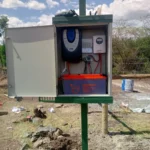
Modern technology — including JVA fence energizers, smart monitoring devices, and solar power systems — ensures that these fences are efficient, reliable, and sustainable. These systems provide real-time voltage data and alerts for quick response during faults or breaches.
In the coming years, expanding such projects across key wildlife corridors could help further reduce human-elephant conflict and promote long-term ecological harmony.
Call | Text | WhatsApp: +254 740 800099 / 0720 456534
Email: info@electricfences.africa
Website: www.electricfences.africa | www.electricfences.co.ke
Conclusion
The story of Naibunga Conservancy and other similar projects shows that electric fencing is more than just a barrier — it’s a bridge between conservation and community survival. When properly installed and maintained, electric fences safeguard people, preserve crops, and protect elephants from retaliatory harm.
With continued collaboration between local communities, conservation agencies, and professional fence installers, Kenya is setting a powerf