

Talk to any farmer who’s lost a fence to a blackout — the energizer dies at 2am, and by morning half the maize is gone or a heifer has wandered three farms over. It’s a familiar story in rural Kenya, where grid power can be patchy at best. It’s also the exact problem a solar powered electric fence is built to solve, and it’s why we’ve watched demand for them grow steadily among livestock farmers, tea and horticulture growers, and conservancies from Laikipia to Kajiado.
At Electric Fences Africa, solar farm fencing is one of our most requested installations, so here’s the guide we usually walk clients through before they commit to a system — what it actually is, what’s in it, what it costs, and where it makes the most sense.
What Is a Solar Powered Farm Electric Fence?
A solar powered farm electric fence pairs a solar panel and battery with a standard electric fence energizer, so the whole system runs off sunlight instead of KPLC or a generator. The energizer still does the same job as any mains-powered unit — sending short, high-voltage pulses down the fence wire that give animals a sharp but harmless shock, training them to keep their distance. The difference is simply where the power comes from.
Because it doesn’t depend on the national grid at all, this setup is the obvious choice for farms, ranches and conservancies in areas where power is unreliable, expensive, or simply doesn’t reach. A well-designed system keeps working through blackouts, cloudy weeks, and remote sites that would otherwise need a diesel generator running around the clock.
Ready to talk through your farm’s layout? Call or WhatsApp us on +254 740 800099 — we’ll ask a few questions about your perimeter and livestock before recommending a system size.
What’s Actually in the System
A complete solar fence isn’t just a panel bolted to a post. There are five parts working together, and skipping or under-speccing any of them is usually why a system underperforms.
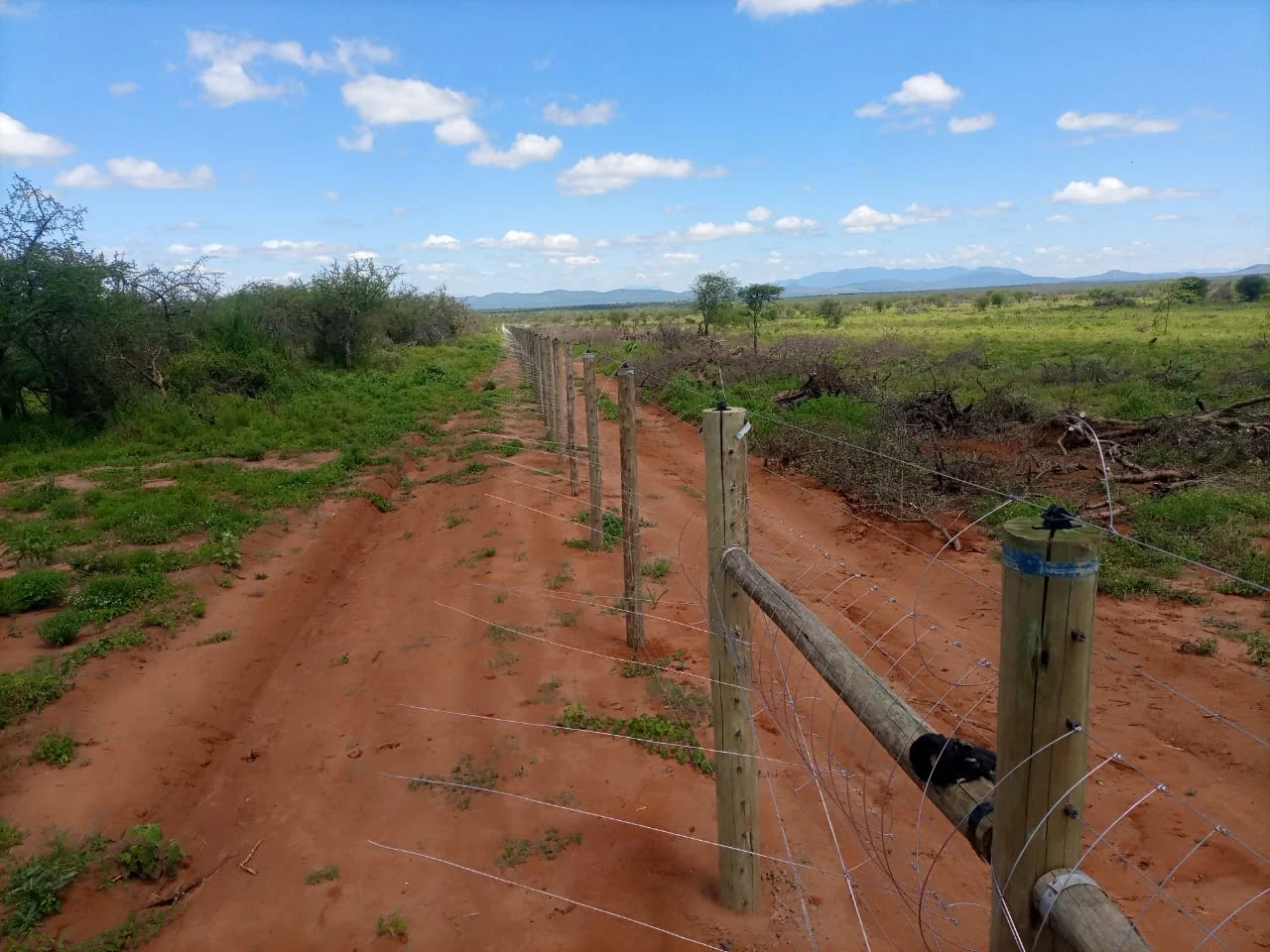
The solar panel captures daylight and converts it to electricity. The battery stores that energy so the fence keeps running overnight and through overcast days — this is the part people underestimate, and it’s the difference between a fence that works reliably and one that dies every few cloudy afternoons. The energizer is the heart of the system, converting stored low-voltage power into the high-voltage pulses that actually deter animals; we install trusted brands including the JVA MB16 solar energizer for larger farms and ranches, the Nemtek Druid 15 for general farm perimeters, and the Stafix X12i for extensive fence runs. Then there’s the fence wire itself — typically 1.6mm or 2.5mm galvanised steel — and the insulators and posts that keep current flowing correctly along the line without leaking to earth.
Get all five right for your specific perimeter length and animal type, and the system genuinely runs itself for years.
Why Farmers Are Switching to Solar
The most obvious reason is cost. Once a solar system is installed, there’s no monthly electricity bill attached to running it — the sun does the work, indefinitely. For farms with long perimeters, that adds up fast compared to a mains-powered fence with rising KPLC tariffs.
The second reason is reach. A solar fence works anywhere the sun does, which means homesteads, grazing blocks and conservancy boundaries far from any transformer can still get a properly powered perimeter — no trenching cable for kilometres, no generator fuel runs.
It also just keeps working. A good battery bank rides through several cloudy days without the fence losing voltage, so protection doesn’t switch off the moment the weather turns — which is exactly the scenario that causes most fence-related livestock or crop losses. And with minimal moving parts, a well-installed system typically runs 10 to 15 years with little more than the occasional check.
For a closer look at the components and brands we install, our solar powered farm electric fence page covers the full technical breakdown.
Where Solar Fencing Gets Used on Kenyan Farms
Livestock containment is the most common application — keeping cattle, goats and sheep inside paddocks or night kraals, particularly on farms practising rotational grazing where fences need to be reliable across large areas. Crop protection is a close second, especially in areas bordering wildlife corridors, where elephants, baboons and antelope can wipe out a season’s harvest in a single night. Conservancies and ranches around Laikipia, the Mara and Kajiado use heavier multi-strand solar systems for exactly this reason — protecting fodder banks, irrigation infrastructure and grazing blocks from both wildlife incursion and stock theft.
It’s also worth mentioning: this isn’t only for large-scale operations. Smallholders protecting a single vegetable plot or a seed store often do just as well with a smaller, portable version of the same idea — see our portable electric fence solutions for Kenyan farmers if your acreage is modest and your fence line needs to move with the season.
What Does a Solar Electric Fence Cost in Kenya?
Pricing depends heavily on perimeter length, terrain, the number of strands needed, and the energizer size required for your animal type and fence length — a single-strand paddock fence and a multi-strand elephant-deterrent perimeter are very different projects. As a general reference point, electric fence installation in Kenya typically runs KSh 450 to KSh 1,800 per linear metre fully installed, with solar systems sitting toward the higher end of that range upfront because of the panel and battery, but with zero electricity cost afterward — which is usually where the long-term savings start to outweigh the initial spend.
The only way to get an accurate number for your farm is a site assessment, which is free. You can request one directly through our instant online quote calculator or by calling +254 740 800099.
Is It Safe for Animals and People?
Yes. The pulse from a properly installed and certified energizer is short, sharp, and memorable — enough to teach an animal to avoid the fence line, without causing injury. This applies whether you’re containing dairy cattle or deterring elephants; the shock is a behavioural deterrent, not a lethal barrier, which is part of why solar electric fencing has become the preferred option for human-wildlife conflict areas over lethal alternatives.
Installation and Ongoing Support
Our process starts the same way every project does: a free site visit to assess perimeter length, terrain, and animal type, followed by a written quotation covering the full system — panel, battery, energizer, wire, posts and installation labour. Our teams install nationwide across all 47 counties, and every system is tested on-site before handover, with training on maintenance and troubleshooting included.
Solar systems are genuinely low-maintenance, but a few habits keep them running at full strength: check that the panel stays free of dust and shading from growing vegetation, inspect battery terminals periodically, and walk the fence line after storms to check for wire slack or fallen branches shorting the current.
Talk to Us Before You Buy
A solar powered electric fence is a meaningful investment, and getting the sizing right the first time — battery capacity, energizer output, wire gauge — is what separates a system that runs for fifteen years from one that disappoints within two. That’s exactly what our free site assessment is for.
Phone / WhatsApp: +254 740 800099 Email: info@electricfences.africa Instant online quote: electricfences.africa/electric-fencing-calculator-free Full product details: electricfences.africa/solar-powered-farm-electric-fences Get in touch directly: Contact Us page
We’ve been installing electric fencing across Kenya since 2009, on properties ranging from half-acre smallholdings to sprawling conservancy boundaries. Reach out with your farm’s details and we’ll come back with a straightforward, written quote — no pressure, no obligation.