


An electric fence energizer (also known as a fence charger) is the most important component of any electric fencing system. It is the device that generates controlled electrical pulses and sends them through the fence wires to deter animals or intruders. If the energizer is weak, oversized, or poorly matched to the fence design, the entire fencing system becomes ineffective.
This guide explains how to choose the right energizer machine in Kenya, taking into account local conditions such as power availability, vegetation, farm size, wildlife pressure, and security needs.
1. Understanding How an Energizer Works
An energizer converts power from a source (mains electricity, battery, or solar) into short, high-voltage electrical pulses. These pulses travel along the fence wires and deliver a sharp but safe shock when touched. The goal is deterrence, not injury.
Key performance indicators include:
- Voltage output (measured in kilovolts, kV)
- Energy output (measured in Joules)
- Fence distance capacity
- Ability to perform under load (vegetation, multiple wires, long distances)
2. Why Choosing the Correct Energizer Matters
Choosing the right energizer ensures:
- Effective animal control or property security
- Consistent voltage across the entire fence
- Reduced maintenance and downtime
- Lower long-term operating costs
- Compliance with safety standards
An undersized energizer leads to weak shocks, while an oversized one can be unnecessarily expensive and inefficient.
3. Key Factors to Consider When Choosing an Energizer in Kenya
A. Fence Length
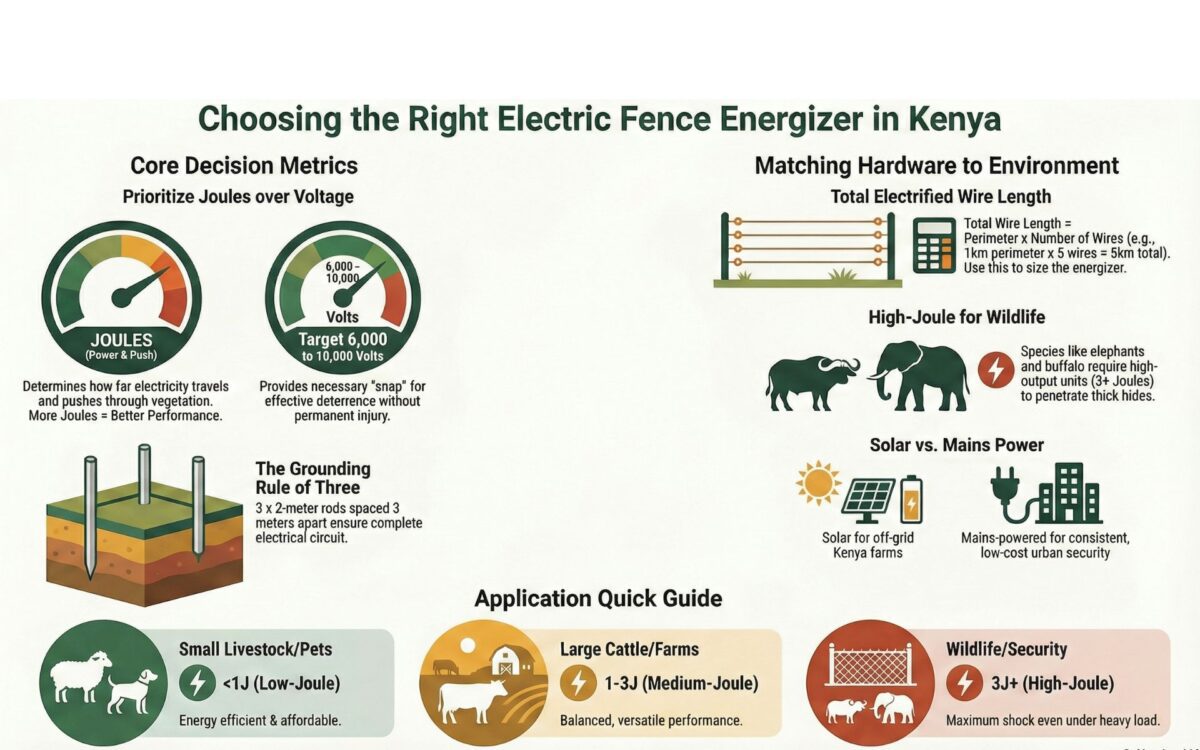
Fence length is one of the most critical considerations. Always calculate the total electrified wire length, not just the perimeter.
For example:
- A 1 km perimeter fence with 5 live wires equals 5 km of energized wire.
Longer fences require energizers with higher Joule ratings to maintain voltage from start to end.
B. Type of Application
Different uses demand different power levels.
- Small livestock such as goats, sheep, and calves require moderate power.
- Cattle need stronger pulses due to thicker hides.
- Wildlife such as elephants, hyenas, and buffalo require high-output energizers.
- Property security fences require consistent high voltage and reliability.
- Temporary grazing systems benefit from portable, low-power energizers.
C. Vegetation Load
Vegetation touching the fence drains power from the system. In regions with heavy grass growth, bushes, or seasonal rains (common in many parts of Kenya), a low-impedance energizer with a higher Joule rating is essential.
Clean fences require less power, while weedy fences demand stronger energizers.
D. Power Availability
Kenya has diverse power conditions, ranging from reliable grid electricity in urban areas to completely off-grid farms and ranches.
The availability of power determines whether you should choose:
- Mains-powered energizers
- Battery-powered energizers
- Solar-powered energizers
- Hybrid systems
4. Voltage vs Joules – What Really Matters
Voltage (kV)
Voltage determines the shock intensity at the point of contact. Most effective fences operate between 6,000 and 10,000 volts.
However, voltage alone is misleading if the energizer lacks sufficient energy to maintain it along the fence.
Joules (Energy Output)
Joules are the most important specification when choosing an energizer.
They determine:
- How far electricity can travel along the fence
- How well the fence performs with vegetation contact
- Overall deterrent effectiveness
Higher Joules mean better performance under real-world conditions.
5. The 10 Main Types of Energizer Machines in Kenya
Below are the ten most common and practical types of electric fence energizer machines used in Kenya, each suited to different applications.
1. Mains-Powered (AC) Energizers
These energizers connect directly to grid electricity.
Best suited for:
- Farms near reliable grid power
- Homes and institutions
- Permanent installations
Advantages:
- Consistent power output
- Lower operating costs
- Minimal maintenance
Limitations:
- Dependence on grid reliability
- Requires backup during power outages
2. Battery-Powered (DC) Energizers
These run on 12V rechargeable batteries.
Best suited for:
- Remote locations
- Temporary fencing
- Areas with unreliable electricity
Advantages:
- Portable and flexible
- Works without grid power
Limitations:
- Batteries require regular charging
- Performance depends on battery condition
3. Solar-Powered Energizers
Solar energizers combine a solar panel, battery, and energizer in one system.
Best suited for:
- Off-grid farms and ranches
- Wildlife areas
- Sustainable installations
Advantages:
- No electricity bills
- Ideal for Kenya’s sunny climate
- Low long-term running costs
Limitations:
- Higher initial cost
- Requires correct panel sizing
4. Hybrid Energizers (AC + Battery + Solar)
Hybrid energizers can operate on mains power, battery, and solar charging.
Best suited for:
- Critical installations requiring zero downtime
- Large farms and security fences
Advantages:
- Automatic power switching
- Maximum reliability
Limitations:
- Higher upfront investment
5. Low-Joule Energizers
These are small-output energizers typically below 1 Joule.
Best suited for:
- Pets
- Small gardens
- Poultry protection
Advantages:
- Affordable
- Energy-efficient
Limitations:
- Not suitable for livestock or wildlife
6. Medium-Joule Energizers
These deliver between 1 and 3 Joules.
Best suited for:
- Cattle
- Goats
- Small to medium farms
Advantages:
- Balanced performance
- Versatile use
Limitations:
- May struggle with heavy vegetation
7. High-Joule Energizers
These deliver 3 Joules and above.
Best suited for:
- Large farms
- Wildlife deterrence
- Long and multi-wire fences
Advantages:
- Strong shock even under load
- Reliable over long distances
Limitations:
- Higher cost
- Requires good grounding
8. Portable Energizers
Lightweight energizers designed for easy movement.
Best suited for:
- Rotational grazing
- Temporary fencing
- Pasture management
Advantages:
- Easy to transport
- Flexible deployment
Limitations:
- Lower power output
- Limited fence length
9. Wildlife-Specific Energizers
Designed specifically for high-risk wildlife areas.
Best suited for:
- Elephant fences
- Conservancies
- Game ranches
Advantages:
- Very high Joule output
- Built for extreme conditions
Limitations:
- Expensive
- Requires professional installation
10. Security Fence Energizers
Built for human intrusion deterrence and monitoring.
Best suited for:
- Homes
- Commercial properties
- Institutions
Advantages:
- Consistent high voltage
- Alarm and monitoring features
- Tamper detection
Limitations:
- Requires compliance with safety standards
6. Grounding: The Most Overlooked Component
A powerful energizer will fail without proper grounding. Grounding allows electricity to complete the circuit when the fence is touched.
Best practices:
- Use at least three galvanized ground rods
- Space rods at least 3 meters apart
- Drive rods 1.5 to 2 meters into moist soil
- Use thick, corrosion-resistant grounding wire
7. Installation and Maintenance Considerations
- Regularly clear vegetation touching live wires
- Inspect insulators, joints, and connections
- Test voltage weekly using a fence tester
- Check batteries and solar panels periodically
8. Budget, Warranty, and Local Support
When buying an energizer in Kenya:
- Consider long-term reliability over cheap pricing
- Choose brands with local service centers
- Check warranty duration and spare parts availability
9. Common Mistakes to Avoid
- Selecting energizers based on voltage alone
- Ignoring future fence expansion
- Poor grounding installation
- Underestimating vegetation growth
- Using low-quality batteries or cables
Conclusion
Choosing the right electric fence energizer machine in Kenya requires a clear understanding of your fence length, purpose, vegetation load, and power availability. Joule rating, power source, and build quality are far more important than voltage alone. With the correct energizer, proper grounding, and good maintenance, an electric fence becomes a reliable, long-term investment for security and livestock management.